
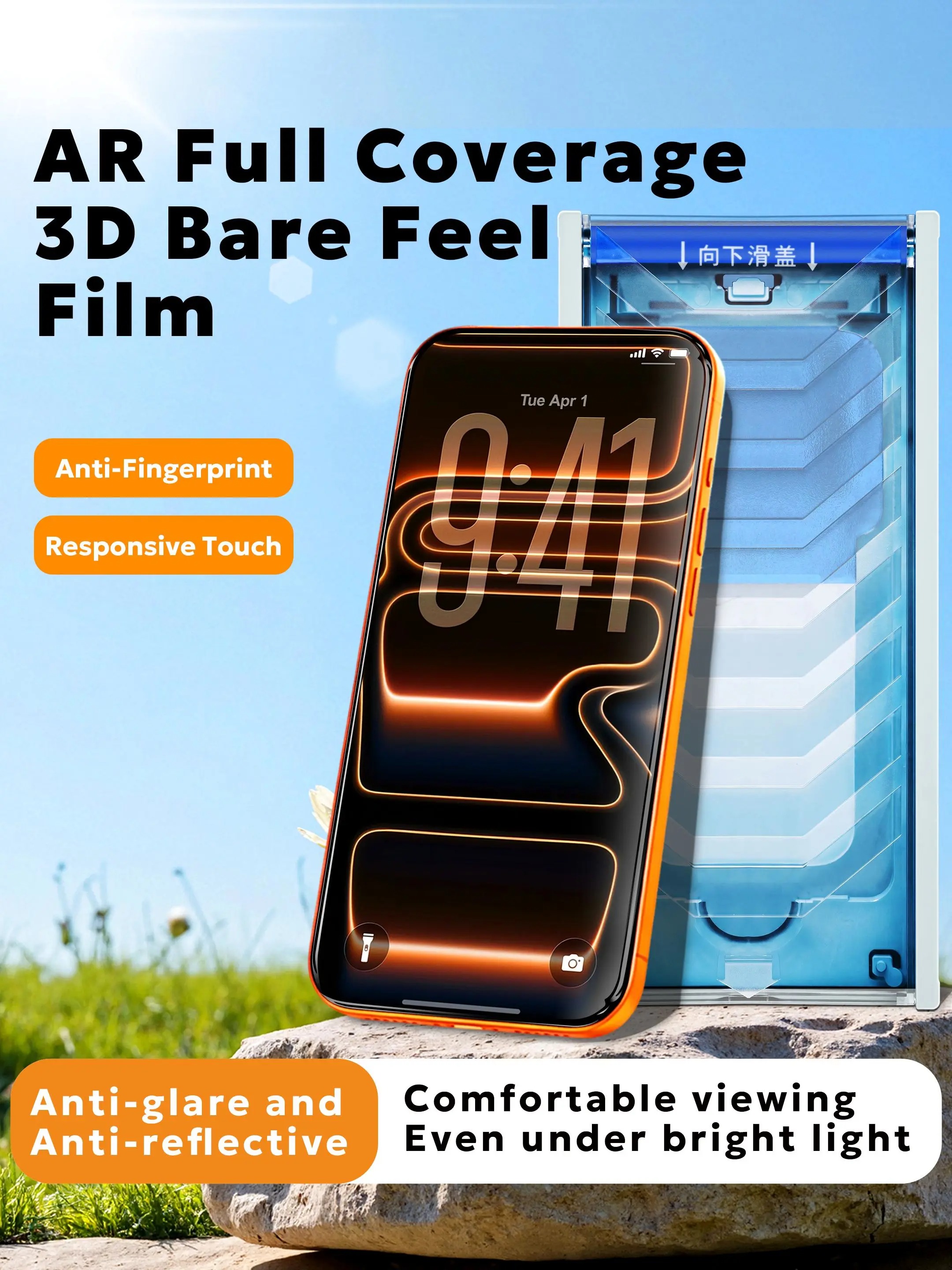
When sourcing smartphone screen protectors, buyers frequently encounter terms such as 9H screen protector and 9H+ screen protector. These terms are widely used in the consumer electronics market to communicate scratch resistance and surface durability.
However, the difference between 9H and 9H+ is not always as straightforward as product labels suggest. In many cases, 9H+ is a commercial or marketing designation rather than a universally standardized hardness grade.
For smartphone brands, distributors, and OEM buyers, understanding what these ratings actually mean is important when comparing suppliers and evaluating product quality.
This guide explains the difference between 9H and 9H+ screen protectors and the factors that matter when selecting a high-quality tempered glass screen protector.
What Does 9H Mean on a Screen Protector?
The term 9H commonly refers to pencil hardness testing.
In this type of test, pencils with different hardness grades are used to evaluate a material's resistance to surface scratching under specified testing conditions.
A product advertised as a 9H screen protector generally indicates that its surface has achieved a specified pencil hardness level under the manufacturer's test conditions.
However, 9H should not be interpreted as meaning:
-
The glass cannot be scratched
-
The glass is impact-proof
-
The screen protector is unbreakable
-
The product is automatically higher quality than all other protectors
Hardness is only one aspect of a screen protector's performance.
What Does 9H+ Mean?
Unlike 9H, 9H+ is not a universally defined industry hardness standard.
Manufacturers and brands may use "9H+" to indicate enhanced surface performance, but the exact meaning can vary between suppliers.
For example, a supplier may use 9H+ to describe a product with improvements in:
-
Scratch resistance
-
Surface coating
-
Glass quality
-
Wear resistance
-
Overall durability
Another supplier may use the same term differently.
Therefore, B2B buyers should not assume that a 9H+ screen protector is automatically superior to every 9H product.
The most reliable approach is to ask the supplier for the actual testing method, test conditions, and performance data.
9H vs 9H+: Key Comparison
| Factor | 9H Screen Protector | 9H+ Screen Protector |
|---|---|---|
| Pencil Hardness | Commonly specified as 9H | May be marketed as above or enhanced 9H |
| Industry Standardization | Relatively common terminology | Less standardized |
| Scratch Resistance | High, depending on product | May be higher, depending on formulation |
| Surface Coating | Varies | Often positioned as enhanced |
| Optical Performance | Depends on glass and coating | Depends on glass and coating |
| Impact Resistance | Depends on glass structure | Not determined by "9H+" alone |
| Manufacturing Quality | Supplier-dependent | Supplier-dependent |
| Verification | Test conditions should be requested | Test conditions are especially important |
The key point is that the label alone does not provide enough information to determine overall product quality.
Hardness Is Not the Same as Impact Resistance
One of the most common misunderstandings in the screen protector market is treating hardness and toughness as the same property.
They are not.
Hardness
Hardness describes a material's resistance to surface indentation or scratching under a specific test method.
Impact Resistance
Impact resistance describes how well a material withstands sudden mechanical force without cracking or breaking.
A screen protector can have excellent surface hardness but still break when subjected to a strong impact.
For this reason, buyers should evaluate both properties when sourcing tempered glass screen protectors.
What Actually Determines Screen Protector Quality?
Rather than focusing only on 9H or 9H+, buyers should evaluate the complete product specification.
1. Glass Quality
The base glass has a major influence on product performance.
High-quality glass should provide:
-
Consistent thickness
-
Excellent flatness
-
Good optical clarity
-
Low defect rates
-
Stable mechanical properties
Poor-quality raw glass can lead to defects even when the surface coating performs well.
2. Glass Thickness
Thickness affects the balance between durability, touch response, and user experience.
A thicker protector may provide greater rigidity, while an ultra-thin design may provide a more seamless experience.
However, simply increasing thickness does not guarantee better overall performance.
The optimal thickness depends on:
-
Smartphone model
-
Display structure
-
Target market
-
Required durability
-
Case compatibility
3. Chemical Strengthening
For glass products, strengthening technology can improve mechanical performance.
Chemical strengthening can increase:
-
Surface compressive stress
-
Bending strength
-
Impact resistance
-
Resistance to crack initiation
This is particularly important for thin glass components designed for smartphones.
4. Surface Coating
The coating system can have a significant effect on the everyday performance of a screen protector.
Common treatments include:
Oleophobic Coating
Helps reduce fingerprints and oil adhesion.
Anti-Fingerprint Coating
Makes the surface easier to clean and maintain.
Anti-Glare Treatment
Reduces reflected light and creates a matte appearance.
Anti-Blue-Light Treatment
Designed for products marketed with specific blue-light filtering characteristics.
The coating should be evaluated for both initial performance and durability over time.
Optical Clarity Matters
A screen protector should protect the display without noticeably reducing visual quality.
Important optical properties include:
-
Transparency
-
Light transmission
-
Haze
-
Color consistency
-
Surface uniformity
-
Reflection
A screen protector with excellent scratch resistance but poor optical clarity may still deliver an unsatisfactory user experience.
For premium smartphone accessories, optical quality should therefore be treated as a core specification rather than an optional feature.
Touch Sensitivity Should Also Be Tested
The screen protector sits directly above the touchscreen, so compatibility is essential.
A properly designed product should maintain responsive touch operation across the display.
Potential factors affecting touch performance include:
-
Glass thickness
-
Adhesive layer
-
Flatness
-
Edge design
-
Installation quality
-
Smartphone display architecture
OEM buyers should test prototypes on the actual target devices before approving mass production.
2.5D Edges and Screen Protector Durability
Many premium screen protectors use a 2.5D edge design.
The edges are slightly curved or polished to provide a smoother transition between the protector and the smartphone display.
Advantages can include:
-
Better hand feel
-
Reduced sharpness
-
Improved appearance
-
More comfortable edge interaction
-
Better compatibility with certain cases
However, edge quality depends heavily on manufacturing precision. Poorly processed edges may be more susceptible to chipping or lifting.
Why 9H+ Does Not Automatically Mean Better Protection
This is particularly important for B2B buyers.
A product labeled "9H+" may not necessarily provide better impact protection, optical clarity, or coating durability than a well-manufactured 9H product.
For example, a high-quality 9H screen protector with:
-
Premium glass
-
Reliable strengthening
-
Durable oleophobic coating
-
Precise edge processing
-
Excellent optical clarity
may provide a better overall user experience than a poorly manufactured product marketed as 9H+.
The manufacturing process and verified test performance matter more than the label alone.
What Should B2B Buyers Ask Suppliers?
When comparing 9H and 9H+ screen protectors from different manufacturers, ask suppliers to provide specific information.
Ask About the Hardness Test
Find out:
-
What test method was used?
-
What pencil hardness was achieved?
-
Under what test conditions?
-
Was the test performed on the glass surface or coating?
This helps ensure that different suppliers are being compared using meaningful data.
Ask About Coating Durability
If the product uses an oleophobic or anti-fingerprint coating, ask about:
-
Coating type
-
Adhesion
-
Abrasion resistance
-
Durability testing
-
Surface performance after repeated use
A coating's initial performance is not enough. Long-term consistency is equally important.
Request Samples
Before placing a large OEM order, request samples and evaluate:
-
Optical clarity
-
Scratch resistance
-
Touch response
-
Edge quality
-
Adhesion
-
Fingerprint resistance
-
Overall appearance
Testing actual samples is much more reliable than comparing product labels alone.
9H vs 9H+: Which Should You Choose?
The answer depends on your product requirements.
Choose a Standard 9H Screen Protector When:
-
You need a reliable mainstream product
-
Cost efficiency is important
-
The product targets mid-range users
-
Standard scratch resistance is sufficient
-
You have clear supplier testing data
Consider a Product Marketed as 9H+ When:
-
You want enhanced surface performance
-
The product is positioned as premium
-
The supplier provides verifiable test data
-
Advanced coatings are required
-
Long-term wear resistance is important
The key is to evaluate verified specifications rather than the 9H+ label alone.
Manufacturing Process of a High-Quality 9H Screen Protector
A premium tempered glass screen protector typically involves several manufacturing stages.
1. Raw Glass Selection
Glass is selected according to:
-
Thickness
-
Optical quality
-
Flatness
-
Surface quality
2. Precision Cutting
The glass is cut according to the target smartphone model.
3. CNC Processing
Precision machining creates:
-
Camera openings
-
Sensor openings
-
Speaker openings
-
Customized profiles
4. Edge Grinding and Polishing
Edges are processed to achieve the required shape, smoothness, and appearance.
5. Glass Strengthening
The glass undergoes an appropriate strengthening process to improve mechanical performance.
6. Surface Treatment
Depending on the specification, manufacturers may apply:
-
Oleophobic coatings
-
Anti-fingerprint coatings
-
Anti-glare treatments
-
Anti-blue-light treatments
-
Other functional coatings
7. Cleaning and Inspection
Finished products are carefully cleaned and inspected for:
-
Scratches
-
Chips
-
Bubbles
-
Dust
-
Dimensional deviations
-
Coating defects
-
Optical inconsistencies
How Tenwinglass Supports Custom Screen Protector Projects
Tenwinglass provides customized glass solutions for smartphones and consumer electronics.
Our product capabilities include:
-
9H Screen Protectors
-
Tempered Glass Screen Protectors
-
2.5D Tempered Glass Screen Protectors
-
Anti-Blue-Light Screen Protectors
-
Privacy Screen Protectors
-
Camera Lens Protectors
-
Custom Glass Components
For OEM and ODM projects, product specifications can be customized according to the target device and application.
Customization may include:
-
Glass thickness
-
Dimensions
-
Edge design
-
Surface treatment
-
Functional coatings
-
Camera and sensor openings
-
Decorative elements
With more than 10 years of industry experience, Tenwinglass supports customers through product development, prototyping, precision processing, quality inspection, and mass production.
Conclusion
The difference between 9H and 9H+ screen protectors is not simply a matter of one being "harder" than the other. While 9H is commonly associated with pencil hardness testing, 9H+ is not a universally standardized rating and may be used differently by different manufacturers.
For B2B buyers, the best way to evaluate a screen protector is to look beyond the marketing label. Glass quality, strengthening technology, surface coatings, optical clarity, edge processing, adhesive performance, and verified test results all contribute to the final product.
Whether you choose a 9H or a product marketed as 9H+, working with a manufacturer that can provide clear specifications, samples, testing data, and consistent mass production is essential.
Looking for a reliable 9H screen protector manufacturer for your OEM or ODM project? Contact Tenwinglass to discuss your specifications, request samples, and develop a customized screen protection solution.