
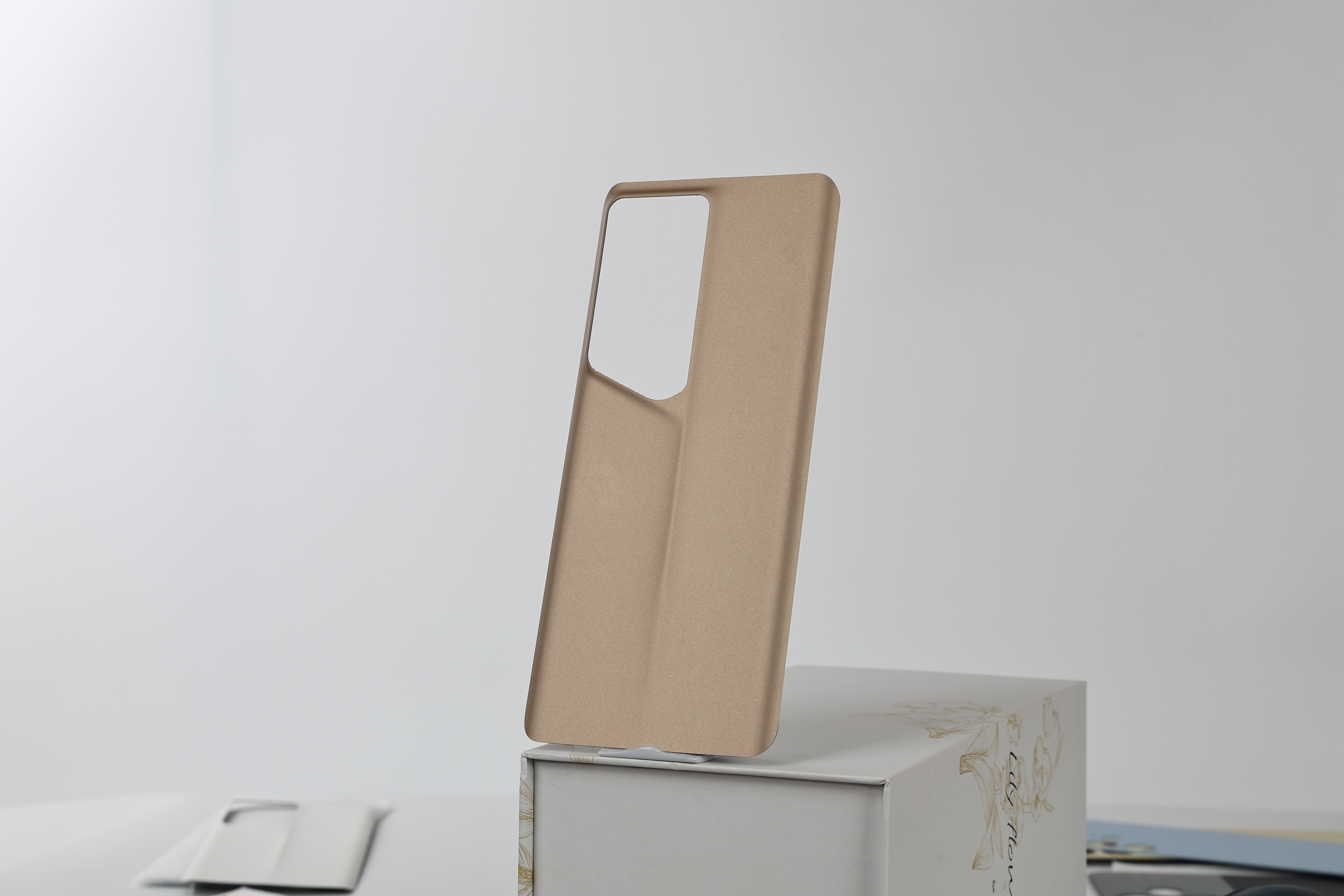
A comprehensive decision framework for overseas buyers — supplier evaluation, MOQ negotiation, quality control, compliance, and logistics
For mobile accessories distributors, consumer electronics brands, and e-commerce sellers worldwide, sourcing phone back covers from China is the most cost-effective path to competitive pricing and product diversity. However, navigating supplier selection, minimum order quantities, quality control, and international logistics requires systematic knowledge. This guide provides a structured approach to help you make confident procurement decisions — whether you are a first-time buyer or an experienced importer optimizing your supply chain.
Why Source Phone Back Covers from China?
China accounts for over 70% of global mobile phone case and accessory production. The country's dominance in this category is supported by several structural advantages that directly benefit overseas B2B buyers:
| Advantage | Impact for B2B Buyers |
|---|---|
| Complete supply chain integration | Raw material suppliers, mold makers, printing services, and packaging providers coexist within a 50km radius, reducing lead times and logistics costs |
| Massive production capacity | Specialized factories can produce 50,000-500,000 units per day, supporting both small trial runs and large-volume orders with consistent quality |
| Technology and process maturity | From tempered glass processing to UV printing and IMD texturing, Chinese manufacturers have refined production processes over two decades of continuous optimization |
| Cost competitiveness | Combined advantages in labor, materials, and scale translate to unit costs 30-60% lower than manufacturing in most other countries, without compromising quality when working with certified suppliers |
Key Industry Clusters for Mobile Accessories
Understanding where production is concentrated helps you target the right suppliers. China's mobile accessories manufacturing is concentrated in several specialized regions, each with distinct capabilities:
Shenzhen — Electronics Innovation Hub
Strongest for new product development, rapid prototyping, and small-to-medium batch production. Home to Huaqiangbei, the world's largest electronics wholesale market. Ideal for buyers seeking quick turnaround and design collaboration.
Dongguan — Precision Manufacturing Base
Specializes in glass processing, CNC machining, and surface treatment. Large-scale factories with advanced equipment for tempered glass, frosted glass, and ag glass back cover production.
Huizhou — Cost-Efficient Volume Production
Lower operational costs than Shenzhen and Dongguan, with large factory campuses optimized for high-volume runs. Strong in screen printing, injection molding, and standard packaging lines.
Yiwu — Small Commodity & Accessories Trade
Massive trading hub with thousands of small-to-medium suppliers. Suitable for buyers seeking ready-made designs, low MOQs, and mixed-category orders. Quality varies significantly — supplier vetting is essential.
Supplier Evaluation Framework: 8 Critical Criteria
Selecting the right supplier is the single most important decision in your procurement process. A poor supplier choice leads to quality issues, missed deadlines, and financial losses. Use this structured evaluation framework to assess potential partners:
1. Company Registration and Business License
Request the supplier's business license (营业执照) and verify it through China's National Enterprise Credit Information Publicity System. Check the registered capital, business scope, and establishment date. A manufacturer with 5+ years of operating history in mobile accessories is generally more reliable than a newly registered trading company.
2. Factory vs. Trading Company
Determine whether you are dealing with a factory or a trading company. Factories offer lower prices and direct quality control but may have higher MOQs. Trading companies provide broader product ranges and language support but add markup. The ideal scenario is a factory-direct supplier with an in-house export team — combining cost advantage with communication efficiency. Request a virtual factory tour or video call with production line walkthrough to verify claimed capabilities.
3. Certifications
Essential certifications for mobile back cover suppliers include ISO 9001 (quality management), ISO 14001 (environmental management), and product-specific certifications such as RoHS, REACH, and CE. For suppliers exporting to North America, FCC compliance is required for products with wireless-related features. For the EU market, the General Product Safety Regulation (GPSR) mandates specific documentation. Always verify certifications by checking the issuing body's public database — do not rely solely on scanned certificates.
4. Production Capacity and Equipment
Assess whether the supplier's production capacity aligns with your order volumes and growth projections. Key indicators include the number of production lines, daily output capacity, CNC machine count (for glass products), printing equipment types, and in-house processing stages. A supplier running at 90%+ capacity leaves little room for rush orders or quality problem rework.
5. Quality Control System
Examine the supplier's QC workflow at each stage: incoming material inspection (IQC), in-process quality control (IPQC), and final outgoing quality control (OQC). A mature QC system includes documented inspection checklists, calibrated measurement tools, AQL sampling standards, and clear defect classification. Request their QC manual or procedures document. Suppliers that hesitate to share quality documentation raise a red flag.
6. Export Experience and Client References
Ask about the supplier's export history: which countries they ship to, their major clients (general categories are acceptable if NDAs prevent disclosure), and whether they have experience with your target market's specific requirements. A supplier familiar with EU packaging regulations or Amazon FBA labeling requirements saves you weeks of back-and-forth on compliance details.
7. Communication and Responsiveness
Evaluate communication quality during the inquiry phase: response time, English proficiency, willingness to answer technical questions, and use of professional documentation (quotations, specification sheets, contracts). Poor communication during the sales process almost always worsens after payment.
8. R&D and New Model Development Capability
For buyers needing ongoing product updates — particularly for the latest iPhone and Samsung Galaxy releases — the supplier's CAD library maintenance speed is critical. Leading suppliers begin developing back cover molds 3-6 weeks before official device launches, often using leaked or CAD-sourced dimensional data. Ask how quickly they can deliver accurate samples after a new phone model release. The TenWinGlass product center is an example of a well-maintained model catalog covering major brands.
MOQ Negotiation: Strategies for B2B Buyers
Minimum Order Quantity (MOQ) is often the first barrier for new buyers. Understanding the economics behind MOQs helps you negotiate effectively:
| Production Type | Typical MOQ Range | Negotiation Levers |
|---|---|---|
| UV-printed glass back covers | 50-300 units per design | Single-design runs; higher unit price for lower volume |
| Screen-printed PC/TPU cases | 2,000-5,000 units per design | Plate/screen setup cost amortization; combined multi-design orders |
| Custom-molded products | 5,000-10,000+ units | Mold cost sharing; commitment to future orders |
| Ready-made/stock products | 10-100 units per SKU | Mixed-category orders; flexible SKU selection |
| Multi-hole precision glass | 300-1,000 units per design | CNC setup time; combined multi-model orders |
Effective MOQ negotiation tactics: Start with a sample order to build the relationship, then negotiate graduated pricing tiers. Propose a pilot order at the MOQ with a written commitment to scale to 3-5x volume within 90 days if quality meets specifications. Offer to pay a small premium (10-15%) on the first order to offset the supplier's setup costs. Request "piggyback" production — combining your order with a larger existing run to share setup costs.
Quality Control: Building a Bulletproof Inspection Protocol
Relying solely on the supplier's internal QC is risky. Implement a multi-layer quality assurance strategy:
Pre-Production
Approve material specifications, color samples, and a golden sample before mass production begins. Confirm CAD files, print resolution, and surface finish requirements in writing.
Key document: Approved Sample Sign-Off Sheet
During Production (DUPRO)
Conduct an in-line inspection when 20-40% of the order is produced. Catch systemic issues early — color drift, alignment errors, adhesive problems — before they affect the entire batch.
AQL Level II, Normal Severity
Pre-Shipment (PSI)
Final random sampling inspection when 100% of production is complete and 80%+ is packed. Verify quantity, appearance, dimensional accuracy, packaging, and labeling.
AQL Level II, 2.5 Major / 4.0 Minor
Critical Inspection Points for Phone Back Covers
Dimensional Accuracy
+/- 0.1mm tolerance; verify with calipers on 10 random samples
Print/Color Consistency
Pantone reference; Delta E = 2.0 max deviation under D65 lighting
Adhesion Strength
3M tape cross-cut test; Class 5B (no peeling) for glass products
Edge Finish
No sharp edges, chips, or burrs; 2.5D arc uniformity for glass covers
Camera/Port Cutout Alignment
Fit test on actual device; no obstruction or light leakage around cutouts
Scratch Resistance
Pencil hardness test; 9H for tempered glass, 2H-3H for PC/TPU surfaces
Compliance and Certification: Market-Specific Requirements
Each target market has distinct regulatory requirements. Non-compliance can result in customs rejection, fines, or marketplace delisting. Plan your compliance strategy before placing orders:
| Market | Required Certifications | Key Focus Areas |
|---|---|---|
| European Union | CE, RoHS, REACH, GPSR | Chemical substance restrictions, product safety documentation, authorized representative requirement |
| United States | FCC (if relevant), Prop 65, CPSIA | Electromagnetic compatibility, chemical warnings, children's product safety |
| United Kingdom | UKCA, UK REACH | Post-Brexit UK-specific marking replacing CE for certain product categories |
| Japan | PSE (if electrical), JIS standards | Strict quality and safety requirements; Japanese-language labeling |
| Middle East / GCC | G-Mark, SASO, ESMA | Regional conformity marking; Arabic-language documentation in some countries |
| Australia / New Zealand | RCM, AS/NZS standards | Combined regulatory compliance mark for electrical safety and EMC |
RoHS compliance is a universal baseline requirement for mobile back covers. It restricts six hazardous substances — lead, mercury, cadmium, hexavalent chromium, PBBs, and PBDEs — plus four phthalates (DEHP, BBP, DBP, DIBP) under RoHS 3. Your supplier should provide third-party lab test reports from accredited laboratories such as SGS, Intertek, or TUV, not in-house self-declarations.
Logistics and Shipping: Optimizing Cost and Speed
Shipping decisions directly impact your landed cost and time-to-market. Understanding trade-offs between modes and Incoterms is essential for accurate margin calculations:
Shipping Mode Comparison
| Mode | Transit Time (to US/EU) | Cost per Unit (typical) | Best For |
|---|---|---|---|
| Air Express (DHL/UPS/FedEx) | 3-7 days | - | Samples, small orders (under 50kg), urgent restocking |
| Air Freight | 5-12 days | - | Medium orders (50-500kg), seasonal product launches |
| Sea Freight (FCL/LCL) | 25-40 days | - | Bulk orders (500kg+), non-urgent restocking, stable SKUs |
Understanding Incoterms
The most common Incoterms for mobile accessories procurement are:
- FOB (Free On Board) — Supplier delivers goods to the designated port and clears export customs. You assume responsibility from loading onto the vessel. Most common for sea freight orders. Gives you control over shipping and insurance costs.
- EXW (Ex Works) — You collect goods from the supplier's factory. Provides maximum cost transparency but requires you to manage all logistics including Chinese export clearance. Only recommended for experienced buyers with freight forwarder relationships in China.
- DDP (Delivered Duty Paid) — Supplier handles all shipping, import customs, and duties to your doorstep. Simplest for buyers but highest supplier markup. Useful for initial trial orders before establishing your own logistics channels.
- CIF (Cost, Insurance, Freight) — Supplier pays for freight and insurance to your destination port. You handle import clearance and final delivery. Common compromise between FOB and DDP.
Payment Terms and IP Protection
Payment Structure
The standard payment structure for first-time B2B orders is 30% deposit, 70% before shipment (T/T 30/70). After establishing trust over multiple orders, you may negotiate to 30/70 against B/L copy or even OA (Open Account) terms. Never pay 100% upfront to a new supplier. For larger orders, consider a Letter of Credit (L/C) which provides bank-intermediated payment security — particularly recommended for first orders exceeding ,000.
Intellectual Property Protection
For buyers with proprietary designs, IP protection must be addressed contractually before sharing design files. Include an NDA (Non-Disclosure Agreement) and a non-circumvention clause in your supply agreement. Register your designs and trademarks in China — Chinese IP law is territorial, and registration within China provides the strongest enforcement basis. For mold ownership, explicitly state in the contract that you own all molds, tooling, and digital assets produced for your orders, with the right to transfer them to another supplier.
Common Pitfalls and How to Avoid Them
Pitfall: Chasing the Lowest Price
Unrealistically low quotes often indicate substandard materials, skipped QC steps, or bait-and-switch tactics where the production batch differs from the approved sample.
Solution: Benchmark 3-5 suppliers; treat quotes more than 20% below the median as suspicious.
Pitfall: Skipping the Sample Stage
Ordering bulk production without first receiving and approving a physical sample is the fastest path to receiving thousands of unusable units.
Solution: Always order and approve a pre-production sample before releasing payment for mass production.
Pitfall: Vague Specifications
Verbal agreements or email-based specifications without measurable parameters leave too much room for interpretation and dispute.
Solution: Create a detailed specification sheet with measurable parameters, reference samples, and acceptance criteria as a contract annex.
Pitfall: Ignoring Packaging Requirements
Even high-quality products will arrive damaged or unsellable if packaging is inadequate for international transit or non-compliant with marketplace requirements.
Solution: Specify individual polybag/case packaging, master carton specifications, Amazon FBA labeling if applicable, and conduct a carton drop test.
Procurement Timeline: A Realistic Schedule
First-time B2B mobile accessories procurement from China typically follows this timeline. Factor these durations into your inventory planning:
Week 1-2: Supplier Identification and RFQ
Send RFQs to 5-8 qualified suppliers with detailed specifications. Compare responses on pricing, MOQ, lead time, and communication quality. Shortlist to 2-3 candidates.
Week 3-4: Sample Development and Evaluation
Order samples from shortlisted suppliers. Evaluate physical quality, fit accuracy, print quality, and packaging. Conduct basic durability tests. Make final supplier selection.
Week 5: Contract and Payment
Finalize purchase agreement, specification annex, and payment terms. Issue deposit (typically 30%). Confirm production schedule and QC milestones.
Week 6-9: Mass Production
Production with DUPRO inspection at 30% completion. Address any quality issues immediately. Prepare for pre-shipment inspection.
Week 10: Pre-Shipment Inspection and Balance Payment
Third-party or in-person pre-shipment inspection. Release balance payment upon approval. Supplier arranges shipping per agreed Incoterms.
Week 11-15: Shipping and Customs Clearance
Air freight: 1-2 weeks. Sea freight: 4-6 weeks. Add 3-7 days for customs clearance at destination. Total door-to-door: 8-16 weeks from PO issuance.
Frequently Asked Questions
How do I verify a Chinese supplier is legitimate before placing an order?
Verify the business license through China's National Enterprise Credit Information Publicity System (http://www.gsxt.gov.cn). Cross-check the company name, registered address, and business scope. Request a live video call showing the factory floor with production equipment matching their claimed capabilities. Check export records through customs databases or trade platforms. For larger orders, commission a third-party factory audit from SGS, Bureau Veritas, or AsiaInspection. Be especially cautious of suppliers whose registered address is a residential apartment or virtual office.
What is a reasonable defect rate for phone back cover imports?
With a competent supplier and proper quality control, acceptable defect rates are 1-3% for standard products and 2-5% for complex glass back covers with multiple cutouts. Anything above 5% indicates systemic quality problems. Your purchase agreement should specify a maximum acceptable defect rate and the remedy — typically replacement units shipped at supplier's cost, or proportional refund. Always order 3-5% extra units above your needed quantity to account for QC rejects and transit damage.
Should I use a sourcing agent or buy directly from the factory?
For first-time buyers, a sourcing agent provides valuable services: supplier identification, negotiation, quality inspection, and logistics coordination. Agents typically charge 5-10% of order value. Once you have established relationships with 2-3 reliable suppliers and understand the procurement process, transitioning to direct sourcing reduces costs. For manufacturers with in-house English-speaking export teams, direct communication is efficient and eliminates the agent markup. The decision depends on your order volume, experience level, and time availability.
How do seasonal factors affect production and shipping timelines?
Two major disruptions to plan around: Chinese New Year (late January to mid-February), when factories close for 2-4 weeks and production delays extend 4-6 weeks before and after the holiday, and the peak shipping season (August to October), when freight rates spike 30-50% ahead of the holiday retail season. Place orders at least 8 weeks before these periods. Additionally, major trade shows like the Canton Fair (April and October) can slow supplier responsiveness as sales teams focus on exhibition preparations.
What are the import duties for phone back covers in major markets?
Under HS code 3926.90 (plastic articles) or 7020.00 (glass articles), typical import duty rates are: EU 0-3.7%, US 0-5.3% (plus potential Section 301 additional tariffs on Chinese goods), UK 0-2%, Canada 0-6.5%, Australia 0-5% (GST additional), GCC countries 5%. Always consult a customs broker for your specific product classification — misclassification can lead to penalties. Factor in 2-5% for customs brokerage fees, port handling, and final-mile delivery on top of duties and freight costs.
Ready to Source Premium Phone Back Covers?
TenWinGlass is a Dongguan-based manufacturer with a complete product line covering tempered glass, AG glass, frosted glass, magnetic, and wireless-charging-compatible back covers. ISO 9001 certified factory, English-speaking export team, and rapid sample turnaround.