
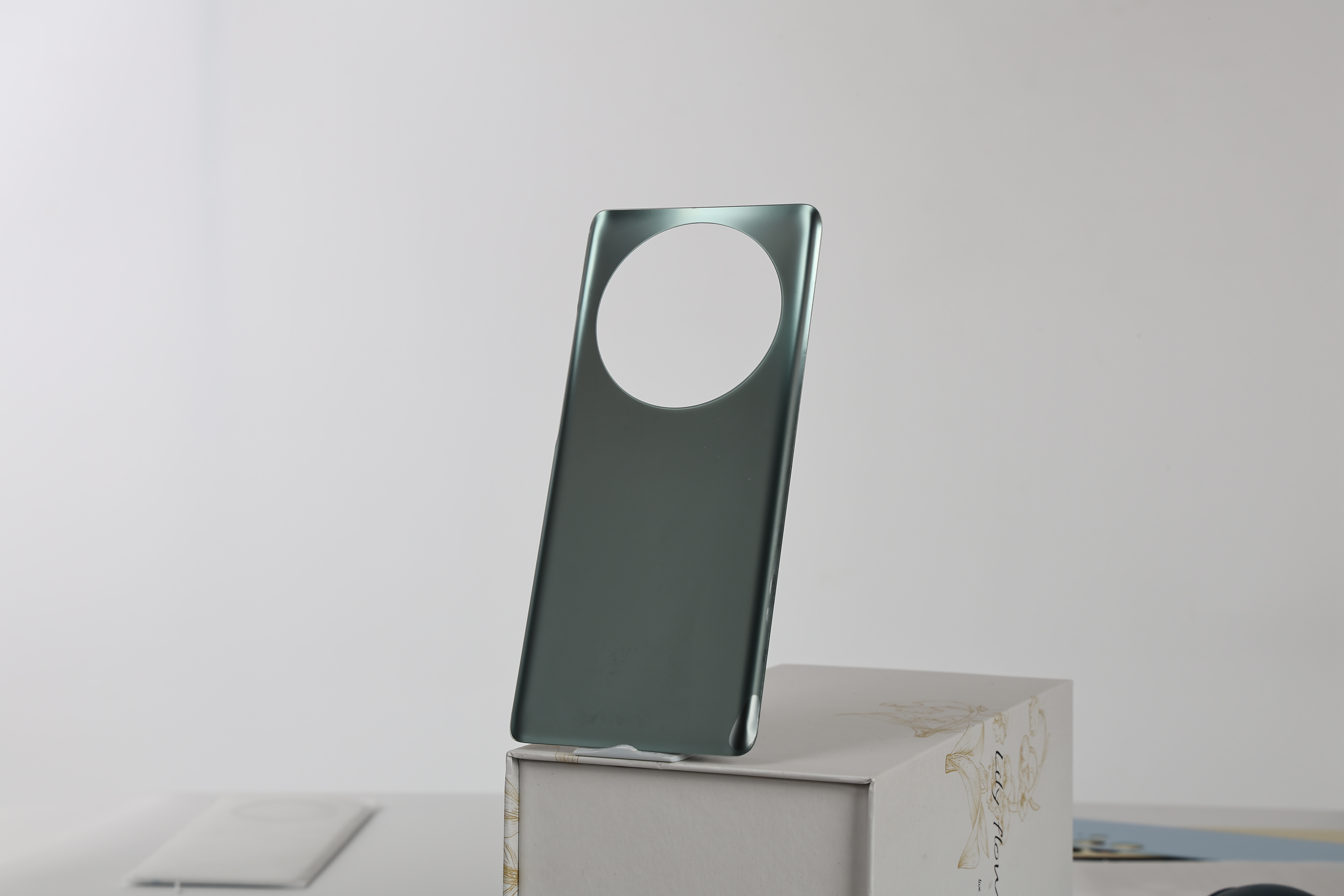
Mastering the technical complexities of high-end device protection through advanced material science and precision engineering at tenwinglass.
The Evolution of Smartphone Aesthetics and Durability
In the contemporary mobile electronics market, the demand for sleek, premium aesthetics has led to a significant shift from polycarbonate and metal housings to sophisticated glass solutions. However, this transition poses a major challenge: how do we maintain structural integrity while achieving a thickness of less than 1mm? The answer lies in the precision of tempered glass back cover Manufacturing.
Manufacturers and brands often face a critical dilemma: rising replacement costs due to fragile designs and the technical difficulty of balancing weight with impact resistance. If your current supply chain struggles with high breakage rates or inconsistent optical clarity, understanding the fundamental differences in glass strengthening processes is the first step toward a superior product. This guide explores the two pillars of glass fortification—Chemical Strengthening and Thermal Tempering—providing you with the technical knowledge to optimize your device's durability.
In this comprehensive technical analysis, you will learn:
The molecular mechanics of ion exchange vs. rapid cooling.
Why thickness dictates the choice of manufacturing method.
Strategic advantages of tenwinglass in high-precision glass processing.
Foundational Knowledge: What is Tempered Glass?
Tempered glass is a type of safety glass processed by controlled thermal or chemical treatments to increase its strength compared with normal glass. In the context of Tempered Glass Back Cover Manufacturing, tempering puts the outer surfaces into compression and the interior into tension. Such stresses cause the glass, when broken, to crumble into small granular chunks instead of splintering into jagged shards, significantly reducing the risk of injury and improving device longevity.
1. Thermal Tempering: The Power of Heat
Thermal tempering is the traditional method used for thicker glass applications, such as automotive windows or architectural panels. The process involves heating the glass to approximately 600 degrees Celsius and then rapidly cooling it with high-pressure air blasts.
The Thermal Process Steps:
- Heating: The glass travels through a furnace where it reaches its softening point.
- Quenching: Rapid cooling of the surface creates a hard "skin" while the core remains hot and fluid for a moment longer.
- Stress Distribution: As the core eventually cools and shrinks, it pulls on the outer skin, creating permanent compressive stress.
2. Chemical Strengthening: The Ion Exchange Revolution
For modern electronics, where components must be ultra-thin, chemical strengthening is the industry gold standard. This is the core of modern Tempered Glass Back Cover Manufacturing for high-end smartphones.
The process involves submersing the glass in a molten salt bath (typically Potassium Nitrate, KNO3) at temperatures around 400 degrees Celsius. Through a process known as Ion Exchange, smaller Sodium ions (Na+) in the glass surface are replaced by larger Potassium ions (K+) from the salt bath.
Because the larger Potassium ions occupy more space than the original Sodium ions, they create a dense layer of compressive stress on the glass surface. This makes the glass exponentially more resistant to scratches and impacts, even at thicknesses as low as 0.4mm.
Comparing Strengthening Technologies
| Feature | Thermal Tempering | Chemical Strengthening |
|---|---|---|
| Minimum Thickness | Typically > 3mm | Down to 0.1mm |
| Optical Distortion | Possible "waves" due to heat | Zero distortion; superior clarity |
| Complexity of Shapes | Limited for small parts | Ideal for 2.5D and 3D curves |
| Strength Type | High impact resistance | Superior scratch and flex strength |
For mobile device integration, our design considerations for one-piece glass back cover manufacturing emphasize chemical strengthening for its unparalleled precision.
Why tenwinglass Leads the Industry
At tenwinglass, we have spent over a decade perfecting the art of Tempered Glass Back Cover Manufacturing. Our facility integrates state-of-the-art CNC machining, automated silk-screen printing, and advanced AG (Anti-Glare) etching to ensure every component meets the rigorous standards of global electronics brands.
Precision CNC Cutting
We achieve tolerances within +/- 0.05mm, ensuring perfect alignment for camera holes and sensor ports in our porous glass back covers.
Custom Surface Finishes
From frosted glass elegance to fingerprint-resistant AF coatings, we tailor the tactile experience to your brand identity.
Rigorous QC Protocols
Every batch undergoes 9H hardness testing, ball-drop impact tests, and precise optical inspection to guarantee 0% defect rates at your assembly line.
Expert FAQ: Solving Your Manufacturing Obstacles
How does your manufacturing ensure compatibility with wireless charging?
Our wireless charging back covers utilize high-permeability glass compositions that do not interfere with induction coils, maintaining 100% charging efficiency while providing 9H protection.
What is the typical lead time for a custom Tempered Glass Back Cover Manufacturing project?
Standard sampling takes 7-10 working days. Mass production typically ranges from 15-25 days depending on the complexity of the design and surface treatments like AG or AR coating.
Can you produce covers for models other than iPhone or Samsung?
Yes. We specialize in OEM/ODM services for all brands. We provide compatible replacement parts and custom designs for global electronics manufacturers, ensuring a precise fit for any device chassis.
Ready to Elevate Your Device Protection?
Don't settle for mediocre glass quality. Partner with tenwinglass for high-performance Tempered Glass Back Cover Manufacturing solutions that combine Italian-inspired aesthetics with industrial-grade durability.
© 2026 tenwinglass. All Rights Reserved. Professional Glass Solutions for Global Electronics.