
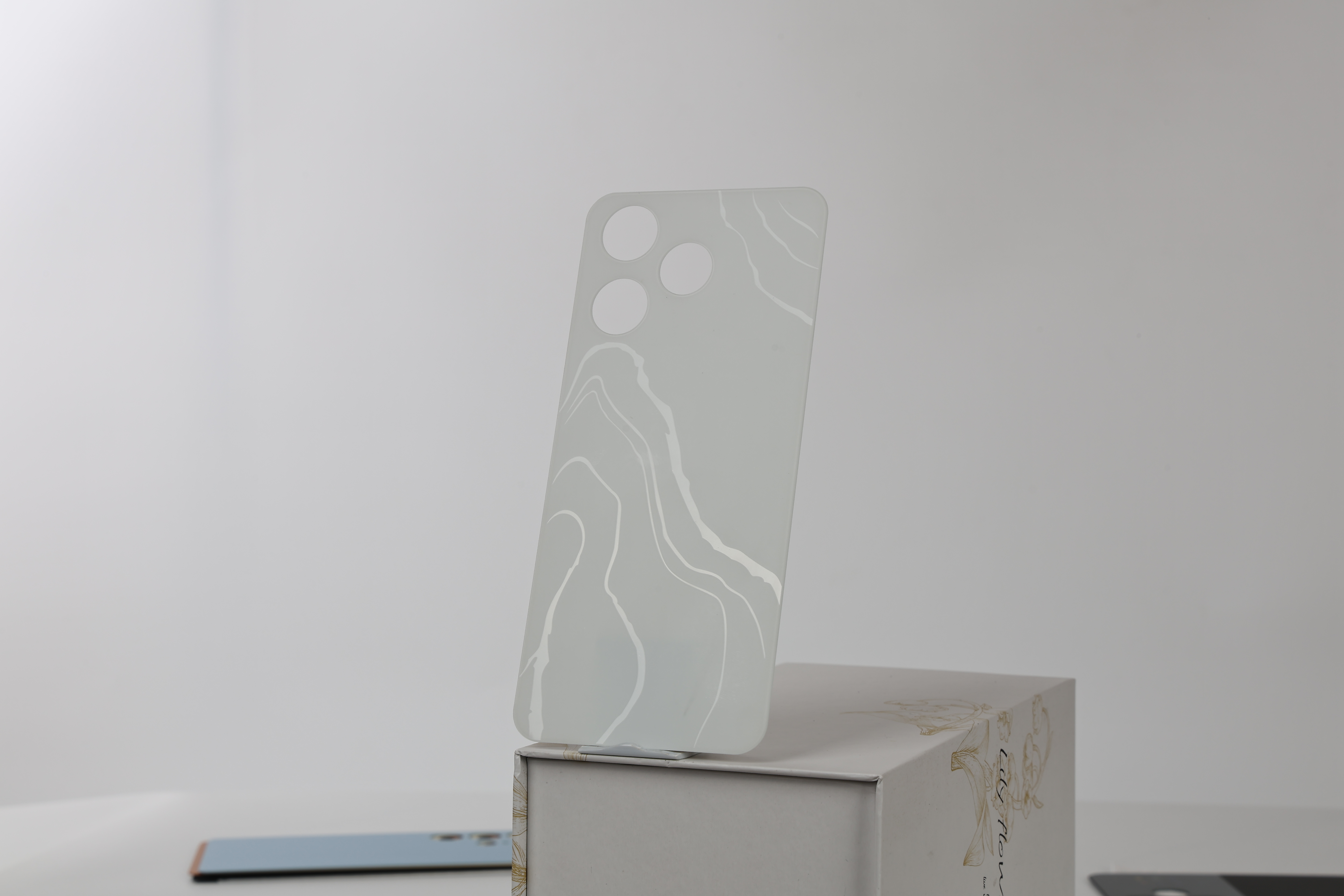
A comprehensive technical guide to the manufacturing standards that define premium glass back covers — from raw material selection and CNC precision to chemical strengthening and quality control
The glass back cover has become a defining feature of modern smartphones. Beyond creating a sleek and premium appearance, it protects internal components, supports wireless charging, and contributes to the overall durability and user experience of the device. However, not all glass back covers are manufactured to the same standard. Factors such as raw material quality, machining precision, surface treatment, and quality control all influence the final product's performance and reliability. In this article, we'll explore the key manufacturing standards that distinguish a high-quality glass back cover and explain what OEM brands should look for when selecting a manufacturing partner.
Why Manufacturing Standards Matter
A smartphone back cover must meet much higher standards than ordinary decorative glass. It must combine visual appeal with mechanical strength while maintaining precise dimensional accuracy for automated assembly.
Poor manufacturing quality can result in:
- Surface scratches and cosmetic defects
- Dimensional inconsistencies
- Poor wireless charging performance
- Weak structural strength
- Color variation between production batches
- Higher product failure rates
Maintaining strict manufacturing standards helps ensure consistent product quality from prototype development to mass production.
Standard 1: High-Quality Raw Materials
The foundation of every premium glass back cover begins with carefully selected raw glass.
A qualified manufacturer should use glass with:
- High optical clarity
- Uniform thickness
- Excellent flatness
- Minimal internal stress
- Consistent chemical composition
Premium raw materials reduce the risk of cracking during processing and improve the appearance of the finished product.
Standard 2: Precision CNC Machining
Modern smartphone designs require extremely tight manufacturing tolerances.
High-quality glass back covers are produced using advanced CNC machining equipment capable of processing complex features with exceptional accuracy.
Typical machining operations include:
- Glass cutting
- Camera lens openings
- Sensor cutouts
- Edge grinding
- Corner profiling
- Precision polishing
Accurate machining ensures proper alignment during smartphone assembly and improves the overall fit and finish.
Standard 3: Tight Dimensional Tolerances
Smartphone components must fit together with minimal deviation.
Manufacturers typically control critical dimensions such as:
- Overall length and width
- Glass thickness
- Camera opening position
- Edge radius
- Hole diameter
- Surface flatness
Maintaining tight tolerances reduces assembly issues and improves production efficiency.
Standard 4: Chemical Strengthening
Most premium smartphone glass back covers undergo chemical strengthening to improve durability.
During this process, the glass is immersed in a molten potassium salt bath, where larger potassium ions replace smaller sodium ions on the surface.
This creates a compressive stress layer that significantly improves:
- Impact resistance
- Bending strength
- Surface durability
- Crack resistance
Chemical strengthening is one of the most important standards for high-end smartphone glass components.
Standard 5: Surface Hardness and Scratch Resistance
Consumers expect smartphones to maintain their appearance after months or even years of daily use.
A high-quality glass back cover should offer excellent resistance to:
- Keys
- Coins
- Dust particles
- Everyday abrasion
- Minor surface scratches
Manufacturers often apply additional protective coatings to improve long-term durability.
Standard 6: Consistent Surface Finishing
Surface appearance directly affects product quality and brand perception.
Manufacturers typically offer multiple finishing options, including:
Gloss Finish
Provides:
- High transparency
- Rich color depth
- Reflective appearance
- Premium visual appeal
AG (Anti-Glare) Finish
Offers:
- Matte texture
- Reduced fingerprints
- Lower glare
- Improved grip
Frosted Finish
Creates:
- Soft-touch feel
- Elegant appearance
- Better resistance to visible smudges
Textured Finish
Textured surfaces improve:
- Grip
- Product differentiation
- Premium aesthetics
Regardless of the finish selected, consistency across production batches is essential.
Standard 7: Decorative Printing Quality
Many smartphone back covers include decorative elements that must remain clear and durable throughout the product's lifespan.
Printing processes may include:
- Silk-screen printing
- UV printing
- Gradient color printing
- Metallic effects
- Brand logos
High-quality printing should provide:
- Accurate color reproduction
- Sharp details
- Strong adhesion
- Excellent wear resistance
Standard 8: Functional Coatings
Additional coatings improve both appearance and performance.
Common options include:
- Anti-fingerprint coating
- Oleophobic coating
- Anti-scratch coating
- Wear-resistant coating
These treatments help maintain a clean appearance while extending the product's service life.
Standard 9: Comprehensive Quality Inspection
Reliable manufacturers inspect products throughout every stage of production.
Inspection procedures typically include:
Appearance Inspection
Checking for:
- Scratches
- Bubbles
- Surface contamination
- Printing defects
Dimensional Inspection
Using precision measuring equipment to verify:
- Thickness
- Hole positions
- Flatness
- Overall dimensions
Mechanical Testing
Evaluating:
- Surface hardness
- Impact resistance
- Adhesion
- Edge strength
Optical Inspection
Ensuring:
- Uniform color
- Surface consistency
- Light transmission
- Cosmetic quality
Automated Optical Inspection (AOI) systems are often used to improve inspection accuracy and consistency.
Standard 10: Stable Mass Production Capability
Producing excellent prototypes is only part of the challenge.
A reliable manufacturer should also maintain consistent quality during high-volume production by implementing:
- Standardized operating procedures
- Automated production equipment
- Process monitoring
- Batch traceability
- Statistical quality control
- Continuous improvement programs
Stable production ensures customers receive the same quality across every shipment.
Certifications and Quality Management
Professional manufacturers typically operate under internationally recognized quality management systems.
Common certifications include:
- ISO 9001 Quality Management System
- RoHS Compliance
- REACH Compliance
- Environmental management standards (where applicable)
These systems help ensure standardized manufacturing processes and continuous quality improvement.
How to Evaluate a Glass Back Cover Manufacturer
When selecting a manufacturing partner, ask the following questions:
- Do they provide OEM and ODM services?
- Can they support rapid prototyping?
- Is chemical strengthening performed in-house?
- What CNC machining capabilities do they offer?
- How is product quality inspected?
- Can they maintain consistent production capacity?
- Do they provide engineering support throughout development?
A manufacturer with integrated production capabilities can reduce lead times, improve communication, and deliver more consistent results.
Why Choose Tenwinglass?
With over 10 years of experience in precision glass manufacturing, Tenwinglass delivers high-quality glass back cover solutions for smartphone brands and consumer electronics manufacturers worldwide.
Our capabilities include:
- Custom Phone Back Covers
- AG Glass Back Covers
- Wireless Charging Back Covers
- Magnetic Phone Back Covers
- Tempered Glass Back Covers
- Frosted Glass Back Covers
- One-piece Glass Back Covers
- anti-drop back covers
- Textured Back Covers
- Back Cover Glass Replacement
Our advanced production equipment, experienced engineering team, and rigorous quality management system enable us to provide complete OEM and ODM solutions—from prototype development to large-scale manufacturing.
Conclusion
A premium glass back cover is the result of strict manufacturing standards, precision engineering, and comprehensive quality control. From selecting high-quality raw materials and applying chemical strengthening to ensuring accurate machining and consistent surface finishing, every production step contributes to the final product's durability, appearance, and performance.
Choosing an experienced manufacturing partner like Tenwinglass ensures your products meet the demanding expectations of today's smartphone market while delivering reliable quality at every stage of production.
Looking for a trusted glass back cover manufacturer? Contact Tenwinglass today to discuss your project, request product samples, or receive a customized OEM/ODM quotation from our engineering team.
Partner with Tenwinglass for Premium Glass Back Cover Manufacturing
From raw material selection and precision CNC machining to chemical strengthening and comprehensive quality control, Tenwinglass delivers high-quality glass back covers that meet the most demanding industry standards.