
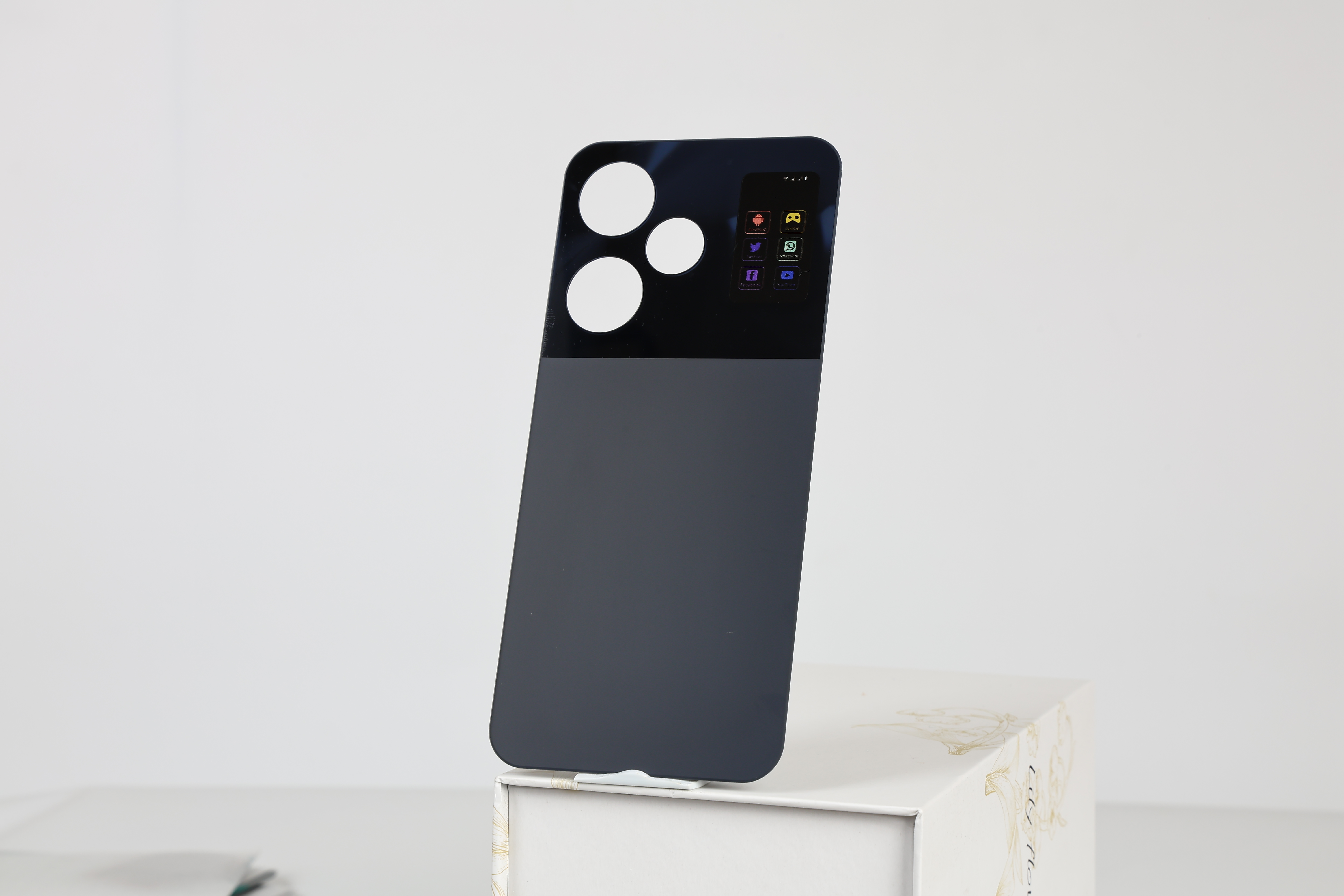
A comprehensive technical guide to chemically strengthened glass back covers — exploring the durability benefits, manufacturing processes, and compatibility with modern smartphone technologies
Today's smartphones are expected to withstand daily drops, scratches, and constant handling while maintaining a premium appearance. As consumers demand slimmer designs and more advanced features such as wireless charging, manufacturers need materials that deliver both durability and aesthetics. A tempered glass back cover has become one of the most popular solutions for modern smartphones. Thanks to advanced strengthening technologies, tempered glass offers excellent resistance to scratches, impacts, and everyday wear while supporting sophisticated industrial designs. In this guide, we'll explore how tempered glass back covers improve smartphone durability, the technologies behind their performance, and why they have become a preferred choice for OEM and ODM manufacturers.
What Is a Tempered Glass Back Cover?
A tempered glass back cover is a glass panel that has undergone a strengthening process to improve its mechanical performance. Unlike ordinary glass, tempered glass is engineered to withstand greater stress and resist damage during daily use.
For smartphones, manufacturers typically use chemically strengthened glass, which creates a layer of compressive stress on the surface without affecting the glass's optical quality or wireless charging performance.
The result is a back cover that combines durability, elegance, and functionality.
Why Durability Matters for Smartphone Back Covers
The back cover is constantly exposed to everyday challenges, including:
- Accidental drops
- Scratches from keys or coins
- Friction during daily handling
- Temperature changes
- Dust and debris
- Frequent cleaning
A durable back cover helps extend the lifespan of the device, reduce repair costs, and maintain a premium appearance over time.
How Tempered Glass Improves Durability
1. Enhanced Impact Resistance
One of the greatest advantages of tempered glass is its ability to withstand impacts better than untreated glass.
During the chemical strengthening process, the glass surface develops compressive stress that helps prevent cracks from forming and spreading.
Benefits include:
- Better resistance to accidental drops
- Reduced risk of edge chipping
- Improved structural integrity
- Greater reliability during daily use
While no glass is completely shatterproof, tempered glass significantly improves impact performance compared to standard glass.
2. Excellent Scratch Resistance
Smartphones are frequently placed in pockets, bags, and on various surfaces, making scratch resistance an important consideration.
Tempered glass offers:
- Higher surface hardness
- Better resistance to everyday abrasion
- Improved protection against minor scratches
- Long-lasting surface quality
This helps preserve the appearance of the device even after extended use.
3. Better Resistance to Daily Wear
Repeated contact with hands, cases, and accessories can gradually wear down lower-quality materials.
Tempered glass maintains its appearance by resisting:
- Surface wear
- Minor abrasions
- Gloss reduction
- Color fading
Protective coatings can further improve resistance to fingerprints and smudges.
4. Structural Stability
Modern smartphones continue to become thinner while incorporating larger batteries and camera modules.
Tempered glass provides the rigidity needed to support these complex internal structures without compromising the overall design.
Its dimensional stability also contributes to:
- Better assembly accuracy
- Improved sealing performance
- Consistent product quality
Chemical Strengthening vs. Thermal Tempering
People often associate "tempered glass" with the thermal tempering process used for architectural or automotive glass. However, smartphone back covers are generally strengthened using chemical tempering, which is better suited to thin, precision glass components.
Chemical Strengthening
This process involves immersing the glass in a molten potassium salt bath. Larger potassium ions replace smaller sodium ions on the glass surface, creating a layer of compressive stress.
Advantages include:
- Suitable for thin glass panels
- High optical clarity
- Excellent dimensional accuracy
- Superior impact resistance for mobile devices
Thermal Tempering
Thermal tempering uses rapid heating and cooling to strengthen thicker glass.
While effective for construction and automotive applications, it is generally not suitable for the ultra-thin glass used in smartphones.
Supporting Modern Smartphone Features
A tempered glass back cover is more than a protective component—it also enables several advanced smartphone technologies.
Wireless Charging
Glass allows electromagnetic waves to pass efficiently, making it ideal for:
- Qi wireless charging
- Fast wireless charging
- Reverse wireless charging
Unlike metal, tempered glass does not significantly interfere with charging performance.
NFC Communication
Smartphones equipped with NFC rely on materials that allow radio frequency signals to pass with minimal interference.
Tempered glass supports reliable NFC functionality for:
- Contactless payments
- Smart access systems
- Device pairing
- Digital identification
Magnetic Accessories
Many smartphones now support magnetic charging and accessories.
Tempered glass works well with:
- Magnetic charging systems
- Magnetic phone wallets
- Car mounts
- Protective accessories
without compromising the device's appearance.
Surface Treatments That Further Improve Durability
Manufacturers often apply additional treatments to enhance both performance and aesthetics.
Anti-Fingerprint Coating
Helps reduce:
- Fingerprints
- Oil residue
- Smudges
making the device easier to keep clean.
AG (Anti-Glare) Finish
An AG finish provides:
- A premium matte appearance
- Better grip
- Reduced reflections
- Improved resistance to visible fingerprints
Frosted Finish
Frosted glass creates a refined texture while minimizing the appearance of minor scratches and daily wear.
Scratch-Resistant Coating
Additional protective coatings can improve resistance to light surface abrasion during long-term use.
Manufacturing Process of Tempered Glass Back Covers
Producing a high-quality tempered glass back cover involves several precision manufacturing steps.
Step 1: Raw Glass Selection
Manufacturers begin with high-quality glass that meets strict standards for flatness, optical clarity, and thickness consistency.
Step 2: CNC Machining
Precision CNC equipment is used to perform:
- Glass cutting
- Edge grinding
- Camera cutouts
- Sensor openings
- Polishing
This ensures accurate dimensions and smooth edges.
Step 3: Chemical Strengthening
The glass is chemically strengthened to improve:
- Impact resistance
- Bending strength
- Surface hardness
- Overall durability
Step 4: Surface Finishing
Depending on customer requirements, manufacturers may apply:
- Gloss finish
- AG finish
- Frosted finish
- Textured finish
Step 5: Decorative Printing
Brand logos, colors, gradients, and decorative patterns are added using processes such as silk-screen printing or UV printing.
Step 6: Quality Inspection
Every production batch undergoes comprehensive inspection, including:
- Dimension verification
- Surface defect inspection
- Scratch testing
- Impact testing
- Color consistency
- Adhesion testing
Strict quality control ensures consistent performance across large production runs.
How to Choose a Tempered Glass Back Cover Manufacturer
When selecting a supplier, consider whether they offer:
- OEM and ODM services
- Precision glass processing
- Chemical strengthening technology
- In-house CNC machining
- Advanced surface treatments
- Rapid prototyping
- Stable production capacity
- Comprehensive quality management
An experienced manufacturer can help optimize both product performance and manufacturing efficiency.
Why Choose Tenwinglass?
With more than 10 years of expertise in precision glass manufacturing, Tenwinglass provides customized tempered glass back cover solutions for leading consumer electronics brands.
Our product portfolio includes:
- Custom Phone Back Covers
- Tempered Glass Back Covers
- AG Glass Back Covers
- Wireless Charging Back Covers
- Magnetic Phone Back Covers
- Frosted Glass Back Covers
- One-piece Glass Back Covers
- anti-drop back covers
- Textured Back Covers
- Back Cover Glass Replacement
From design consultation and rapid prototyping to mass production, we provide complete OEM and ODM services backed by advanced manufacturing technologies and rigorous quality control.
Conclusion
A tempered glass back cover offers an ideal combination of durability, functionality, and premium design. Through chemical strengthening, precision manufacturing, and advanced surface treatments, it provides excellent resistance to scratches, impacts, and daily wear while supporting modern features such as wireless charging and NFC.
For smartphone brands looking to deliver reliable, high-quality devices, partnering with an experienced manufacturer is essential.
Looking for a trusted tempered glass back cover manufacturer? Contact Tenwinglass today to discuss your project, request product samples, or receive a customized OEM/ODM quotation from our engineering experts.
Build Durability with Tenwinglass Tempered Glass Back Covers
From chemical strengthening and precision CNC machining to surface finishing and quality assurance, Tenwinglass provides complete OEM/ODM solutions for durable tempered glass back covers.