
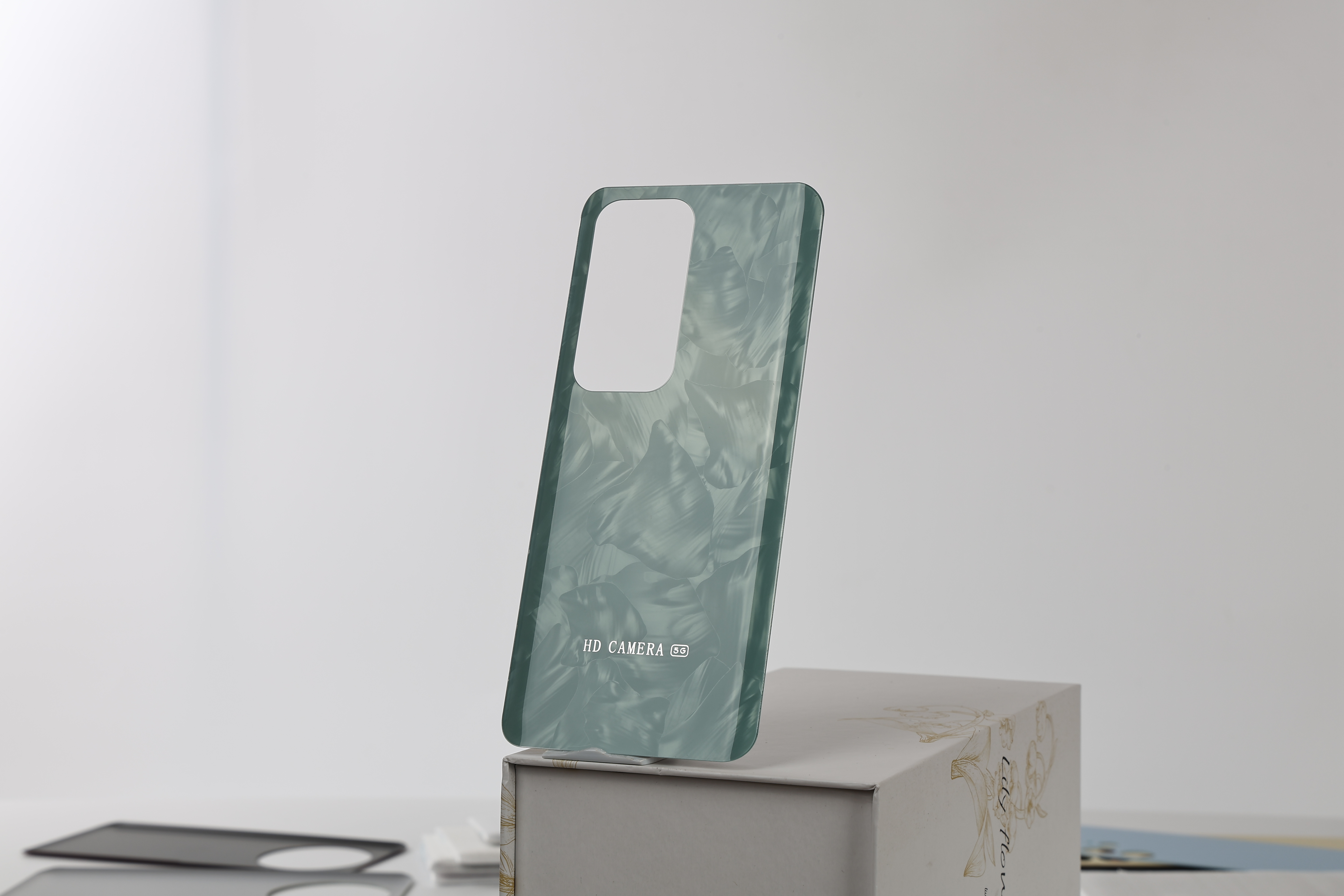
A comprehensive engineering guide to designing wireless charging back covers — covering material selection, key design considerations, surface finishes, manufacturing processes, and best practices for OEM/ODM projects
Wireless charging has become a standard feature in today's smartphones, offering users greater convenience and a cleaner charging experience. As this technology continues to evolve, the wireless charging back cover has become a critical component in smartphone design. A well-designed back cover must do more than protect the device—it must also enable efficient power transfer, maintain signal performance, withstand daily wear, and complement the product's overall aesthetics. This guide explains the key design considerations, material options, manufacturing processes, and best practices for developing a high-quality wireless charging back cover.
What Is a Wireless Charging Back Cover?
A wireless charging back cover is a rear housing designed to allow electromagnetic energy to pass efficiently between a wireless charging pad and the charging coil inside a smartphone.
Unlike traditional back covers that focus mainly on protection and appearance, wireless charging back covers must balance multiple performance requirements, including:
- Efficient wireless power transmission
- Structural durability
- Heat management
- Premium appearance
- Scratch resistance
- Compatibility with NFC and magnetic accessories
Selecting the right materials and manufacturing methods is essential for achieving these goals.
Why Material Selection Matters
Material choice directly affects charging efficiency, durability, and user experience.
Glass
Glass is currently the preferred material for premium smartphones.
Advantages include:
- Excellent wireless charging compatibility
- Premium appearance
- High scratch resistance
- Superior color and texture options
- Support for advanced surface treatments
Glass also allows manufacturers to create glossy, frosted, textured, or AG (Anti-Glare) finishes while maintaining charging performance.
Composite Materials
Composite structures combine multiple materials to achieve a balance between performance and cost.
Benefits include:
- Reduced weight
- Improved drop resistance
- Greater design flexibility
- Competitive manufacturing costs
Composite back covers are often used in mid-range smartphones.
Plastic
Polycarbonate (PC) and other engineering plastics are suitable for cost-sensitive devices.
Advantages include:
- Lightweight construction
- Excellent impact resistance
- Easy molding for complex shapes
- Lower production costs
Although plastic supports wireless charging, it generally offers a less premium appearance than glass.
Key Design Considerations
Designing a wireless charging back cover requires careful attention to several engineering factors.
1. Charging Efficiency
The back cover should minimize energy loss between the charging pad and the receiver coil.
Designers should consider:
- Material thickness
- Dielectric properties
- Surface flatness
- Manufacturing tolerances
A thinner and more uniform structure generally helps improve charging performance while maintaining structural integrity.
2. Coil Alignment
Proper alignment between the charging coil and the back cover is essential.
Accurate positioning helps:
- Improve charging speed
- Reduce energy loss
- Prevent charging interruptions
- Enhance user experience
Precision manufacturing ensures consistent alignment during assembly.
3. Heat Dissipation
Wireless charging naturally generates heat during operation.
The back cover should be designed to help manage thermal performance by:
- Optimizing material thickness
- Using heat-resistant materials
- Supporting internal heat transfer paths
- Preventing localized heat buildup
Effective thermal management contributes to charging stability and long-term component reliability.
4. Structural Strength
Even with a slim profile, the back cover must withstand everyday use.
Manufacturers evaluate:
- Drop resistance
- Bending strength
- Surface hardness
- Long-term durability
For glass back covers, chemical strengthening significantly improves resistance to impact and cracking.
5. Camera Module Integration
Modern smartphones often feature large or multi-lens camera systems.
The back cover design must provide:
- Accurate camera cutouts
- Strong structural support
- Smooth transitions around camera modules
- Consistent cosmetic appearance
High-precision CNC machining ensures excellent dimensional accuracy.
6. Magnetic Accessory Compatibility
Many smartphones now support magnetic accessories, including charging systems, wallets, and mounts.
The back cover should be compatible with:
- Magnetic charging rings
- Magnetic alignment systems
- Magnetic phone accessories
- NFC communication
Proper structural design helps ensure reliable performance without affecting wireless charging efficiency.
Surface Finishes for Wireless Charging Back Covers
Surface finishing influences both appearance and usability.
Popular options include:
Gloss Finish
Ideal for:
- Premium flagship smartphones
- Bright colors
- Reflective surfaces
- High-end branding
AG (Anti-Glare) Finish
Provides:
- Matte appearance
- Reduced fingerprints
- Better grip
- Modern industrial design
Frosted Finish
Offers:
- Soft-touch feel
- Elegant appearance
- Improved resistance to visible smudges
Textured Finish
Textured surfaces improve:
- Grip
- Product differentiation
- User comfort
Different finishes can be combined with decorative printing to create unique product designs.
Manufacturing Process
A high-quality wireless charging back cover typically involves multiple precision manufacturing stages.
Step 1: Material Preparation
Manufacturing begins with selecting premium glass, composite, or plastic materials that meet product specifications.
Step 2: CNC Machining
Precision CNC equipment is used to perform:
- Cutting
- Camera hole machining
- Edge grinding
- Sensor openings
- Polishing
Accurate machining ensures excellent assembly performance.
Step 3: Chemical Strengthening (Glass)
Glass back covers undergo chemical strengthening to improve:
- Impact resistance
- Surface hardness
- Bending strength
- Durability
Step 4: Surface Treatment
Manufacturers apply decorative finishes such as:
- AG treatment
- Frosted finish
- Gloss polishing
- Textured surfaces
Additional coatings may include:
- Anti-fingerprint coating
- Oleophobic coating
- Scratch-resistant coating
Step 5: Decorative Printing
Silk-screen printing and UV printing are commonly used for:
- Brand logos
- Decorative graphics
- Gradient colors
- Product identification
Step 6: Quality Inspection
Each product is inspected for:
- Dimensions
- Surface defects
- Color consistency
- Scratch resistance
- Flatness
- Optical quality
- Wireless charging compatibility
Comprehensive quality control ensures reliable performance throughout mass production.
Common Challenges in Wireless Charging Back Cover Design
Developers often face several design challenges.
Balancing Strength and Thickness
A thinner back cover generally improves charging efficiency but may reduce mechanical strength.
Finding the right balance is essential.
Maintaining Cosmetic Quality
Premium smartphones require flawless finishes.
Manufacturers must carefully control:
- Color uniformity
- Surface texture
- Printing accuracy
- Coating consistency
Supporting New Technologies
As smartphones continue to integrate new technologies, back covers must remain compatible with:
- Faster wireless charging standards
- Reverse wireless charging
- Magnetic charging systems
- NFC communication
- Future accessory ecosystems
Choosing the Right Manufacturing Partner
A reliable supplier should offer:
- OEM and ODM services
- Precision CNC machining
- Chemical strengthening technology
- Advanced surface treatments
- Decorative printing capabilities
- Strict quality management
- Rapid prototyping
- Stable mass production
Working with an experienced manufacturer helps shorten development cycles and improve product consistency.
Why Choose Tenwinglass?
Tenwinglass has over 10 years of experience manufacturing premium glass components for consumer electronics.
We provide customized solutions including:
- Wireless Charging Back Covers
- Custom Phone Back Covers
- AG Glass Back Covers
- Magnetic Phone Back Covers
- Tempered Glass Back Covers
- Frosted Glass Back Covers
- One-piece Glass Back Covers
- anti-drop back covers
- Textured Back Covers
- Back Cover Glass Replacement
Our integrated manufacturing capabilities—from engineering support and prototype development to precision machining and mass production—help global customers bring innovative smartphone designs to market with confidence.
Conclusion
A well-designed wireless charging back cover is essential for delivering efficient charging performance, structural reliability, and a premium user experience. Material selection, precision engineering, surface treatment, and quality control all play vital roles in achieving these objectives.
By partnering with an experienced manufacturer like Tenwinglass, smartphone brands can develop customized wireless charging back covers that meet the demands of modern mobile devices while maintaining outstanding quality and design.
Looking for a trusted wireless charging back cover manufacturer? Contact Tenwinglass today to discuss your OEM/ODM project, request samples, or receive a customized quotation from our engineering team.
Develop Your Next-Generation Wireless Charging Back Cover
From design optimization and material selection to precision manufacturing and quality assurance, Tenwinglass provides complete OEM/ODM solutions for wireless charging back covers.