
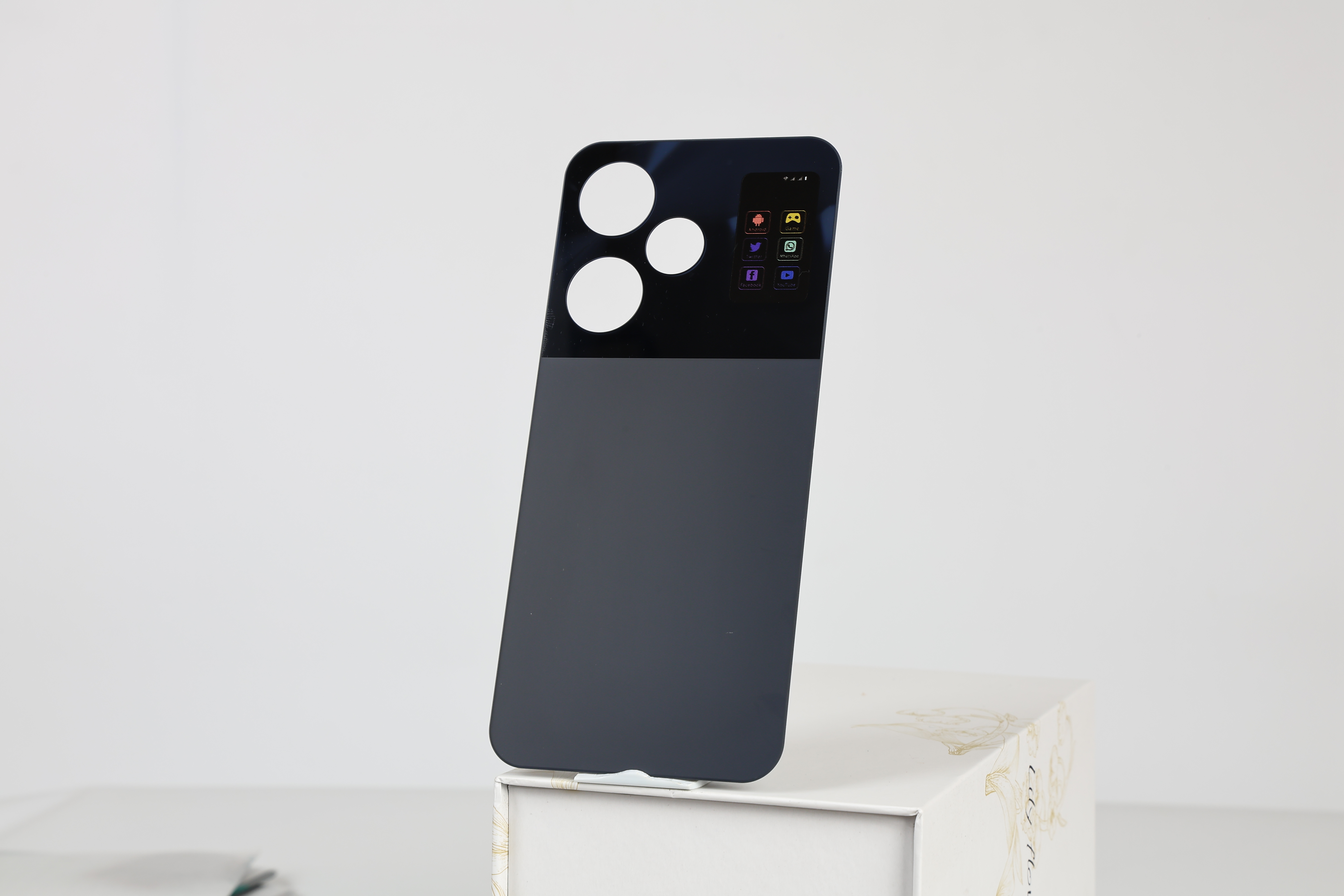
ag glass back cover: Anti-Glare Surface Treatment & Manufacturing Guide
Explore chemical etching, nano-coating, and quality standards for anti-glare glass back panels in B2B manufacturing
Anti-glare (AG) glass has become one of the most sought-after surface treatments for smartphone back covers, delivering a distinctive matte aesthetic combined with fingerprint resistance and enhanced grip. For B2B buyers — including OEM manufacturers, mobile accessories distributors, and consumer electronics brands — understanding the AG glass manufacturing process, available surface treatment methods, and quality control standards is essential for sourcing reliable, high-performance back cover panels that satisfy both consumer expectations and production cost targets.
What Is AG Glass?
AG glass, short for anti-glare glass, is a specially treated glass surface engineered to diffuse reflected light, reducing visible glare while maintaining high optical clarity. Unlike standard glossy glass that acts like a mirror under bright lighting, AG glass features a micro-structured surface — created through chemical etching, coating deposition, or mechanical texturing — that scatters incoming light at multiple angles, effectively eliminating sharp reflections.
When applied to smartphone back covers, AG glass provides three key advantages: a premium matte appearance that differentiates devices from conventional glossy models, significantly reduced fingerprint visibility that keeps the surface looking clean throughout the day, and improved tactile grip that makes the phone more comfortable and secure to hold. These properties have made AG glass back covers a preferred choice for flagship smartphones from brands including Apple (iPhone 11 Pro "matte glass"), Samsung, Huawei, and Xiaomi.
AG Glass vs. Regular Glass vs. Frosted Glass
Buyers often confuse AG glass with frosted glass, but the two are fundamentally different in surface structure, manufacturing method, and optical performance. The table below clarifies the distinctions:
| Property | AG Glass | Regular Glass | Frosted Glass |
|---|---|---|---|
| Surface Treatment | Chemical etching or nano-coating | Polished, no treatment | Sandblasting or acid etching |
| Surface Texture | Micro-scale irregular (0.05–0.3 µm) | Smooth, mirror-like | Macro-scale rough (1–10 µm) |
| Light Transmission | 90% – 95% | 92% – 96% | 70% – 85% |
| Haze Level | 3% – 15% | < 1% | 30% – 80% |
| Glare Reduction | Excellent | None | Good (but blurry) |
| Fingerprint Resistance | High | Low | Moderate |
| Tactile Feel | Smooth matte, silky | Slick, slippery | Rough, grainy |
| Print Compatibility | UV print, compatible with AG layer | UV print, excellent adhesion | Limited, prints may appear uneven |
The critical difference lies in the scale of surface texturing. AG glass operates at the micro-level — its surface irregularities are smaller than the wavelength of visible light — which allows it to scatter reflections without compromising image clarity. Frosted glass, by contrast, has much larger surface structures that create a deliberately opaque, diffused appearance. For phone back covers, AG glass is the superior choice when both visual clarity (for UV-printed designs) and anti-glare properties are required.
AG Glass Surface Treatment Methods
Several manufacturing methods can produce the anti-glare effect on glass. The choice of treatment method affects cost, durability, haze level, and suitability for specific device applications. Below are the three primary methods used in AG glass back cover production:
1. Chemical Etching (Acid Etching)
Chemical etching is the most widely used method for producing AG glass in high-volume manufacturing. The process involves immersing the glass panel in an acid solution — typically hydrofluoric acid (HF) mixed with sulfuric acid (H2SO4) — which selectively dissolves microscopic amounts of the glass surface, creating a uniform micro-texture. The etching depth, duration, and acid concentration directly control the final haze level and surface roughness.
Key parameters:
- Etching depth: 0.05 µm – 0.3 µm (controls haze intensity)
- Processing temperature: 20°C – 35°C
- Immersion time: 30 seconds – 5 minutes (varies by desired haze)
- Post-etch cleaning: Deionized water rinse + neutralization bath
Chemical etching produces a permanent, abrasion-resistant AG surface because the texture is created by removing material rather than applying a coating. This makes it highly durable and resistant to wear from daily handling. It is the preferred method for premium smartphone glass covers where long-term surface integrity is critical.
2. Nano-Coating (Spin Coating / Spray Coating)
Nano-coating applies a thin layer (typically 50–200 nm) of silica-based or fluoropolymer-based particles onto the glass surface to create the anti-glare effect. The coating can be applied by spin coating (for flat panels) or spray coating (for curved or irregular shapes). After deposition, the coating is cured at elevated temperatures (80°C – 150°C) to form a durable, transparent film.
Nano-coating offers advantages in production flexibility — the haze level can be precisely tuned by adjusting particle size and coating thickness — and it can be combined with additional functional layers such as anti-fingerprint (AF) oleophobic coatings in a single application step. However, nano-coated AG surfaces are generally less scratch-resistant than chemically etched ones, as the anti-glare effect resides in the coating rather than the glass substrate itself.
3. AG + AF Combined Treatment
Many high-end AG glass back covers use a two-step process: chemical etching for the base anti-glare texture, followed by vacuum deposition or spray application of an anti-fingerprint (AF) oleophobic coating. The AF coating fills the micro-voids of the etched surface, reducing surface energy and making oils and sweat bead up rather than spread, which dramatically enhances smudge resistance and makes the surface easier to clean.
Chemical Etching
Permanent micro-texture via acid treatment. Highest durability and abrasion resistance.
Best for: High-volume premium devices
Nano-Coating
Precise haze control via particle deposition. Flexible for prototyping and custom specs.
Best for: Custom and mid-range products
AG + AF Combined
Etched AG surface with oleophobic topcoat. Maximum fingerprint and smudge resistance.
Best for: Flagship and premium models
AG Glass Back Cover Manufacturing Process
Producing an AG glass back cover involves multiple precision manufacturing steps. Each stage requires specialized equipment and strict quality control to ensure consistent output across production batches. The complete process typically follows this sequence:
Step 1: Glass Cutting and Shaping
Raw float glass or aluminosilicate glass sheets are cut to device-specific dimensions using CNC precision cutting or laser scribing. For curved back covers, the glass is shaped using hot bending at temperatures of 600°C – 750°C in precision molds.
Step 2: Edge Polishing (2.5D / 3D)
CNC edge grinding and polishing create smooth, rounded edges — typically 2.5D arc or full 3D curved edges — that match the device chassis contour. This step prevents chipping and ensures a seamless transition between the glass and the phone body.
Step 3: Chemical Strengthening (Tempering)
The shaped glass undergoes ion exchange tempering in a molten potassium salt bath (KNO3) at 380°C – 420°C for 4–8 hours. This process replaces smaller sodium ions with larger potassium ions in the glass surface, creating a compressive stress layer that significantly increases impact resistance and achieves 9H hardness.
Step 4: AG Surface Treatment
The tempered glass is processed through the chosen AG treatment — chemical etching, nano-coating, or combined AG+AF — to create the anti-glare micro-texture. Etching parameters are carefully calibrated to achieve the target haze level (typically 3%–12% for back covers).
Step 5: UV Printing and Design Application
Custom designs, logos, gradients, and patterns are printed onto the inner surface of the AG glass panel using high-resolution UV flatbed printers (1440 dpi or higher). The AG texture faces outward, while the printed design is visible through the glass with minimal distortion.
Step 6: Adhesive Application, Cutting, and QC
AB double-sided optical adhesive is applied to the inner surface, and camera hole / sensor cutouts are made using precision CNC drilling. Each unit undergoes quality inspection including visual defect check, haze measurement, adhesion testing, and drop testing.
Key Quality Specifications for AG Glass Back Covers
When evaluating AG glass back cover suppliers, B2B buyers should request detailed spec sheets covering the following critical parameters:
AG Glass Back Cover Technical Specifications
Glass Type
Aluminosilicate / Soda-lime tempered
Hardness
9H (pencil hardness test)
Thickness Range
0.5mm – 1.1mm
Light Transmission
90% – 95%
Haze Level
3% – 15% (customizable)
Gloss (60°)
50 – 110 GU (adjustable)
Surface Roughness (Ra)
0.05 µm – 0.3 µm
AF Coating (Optional)
Water contact angle ≥ 110°
Adhesive
AB double-sided optical adhesive
Drop Test Standard
1.0m – 1.5m onto steel plate
Surface Treatment Method Comparison
Choosing the right AG treatment method depends on target market, production volume, cost budget, and performance requirements:
| Criteria | Chemical Etching | Nano-Coating | AG + AF Combined |
|---|---|---|---|
| Scratch Resistance | Excellent (permanent texture) | Moderate (coating can wear) | Good (etched base + topcoat) |
| Haze Consistency | High (controlled by bath) | High (controlled by thickness) | High |
| Anti-Fingerprint | Moderate | Good | Excellent |
| Production Cost | Medium | Medium-Low | Medium-High |
| UV Print Compatibility | Good (print on inner surface) | Good | Good (print before AF coat) |
| Lead Time (per batch) | 7 – 12 business days | 5 – 10 business days | 10 – 15 business days |
B2B Sourcing: Evaluating AG Glass Back Cover Manufacturers
Selecting the right manufacturing partner for AG glass back covers requires careful evaluation of technical capability, production consistency, and communication reliability. Beyond the standard criteria for general glass cover suppliers, AG glass production demands additional scrutiny in several areas:
AG Treatment Capability
Does the factory operate its own etching line and coating equipment? In-house AG processing ensures better quality control and faster turnaround compared to outsourcing the treatment to a third party. Ask for a factory tour or facility verification.
Haze and Gloss Consistency
Request haze meter and gloss meter test reports from production samples. Consistent haze levels (± 2% across batches) indicate well-controlled etching or coating processes. Inconsistent haze results in visible variation between units in the same order.
AF Coating Durability
If AG+AF treatment is specified, test the oleophobic coating durability using steel wool abrasion (ASTM F735) and fingerprint simulation tests. Quality AF coatings maintain a water contact angle above 100° after 5,000+ wipe cycles.
Certifications and Compliance
Verify ISO 9001 certification, RoHS compliance for materials, and REACH compliance for chemical substances used in etching and coating. Manufacturers serving European and North American markets must meet strict environmental and safety regulations.
Common Applications of AG Glass Back Covers
AG glass back covers are used across a wide range of consumer electronics and industrial applications:
- Smartphones — Flagship and mid-range phones where matte finish and fingerprint resistance are key selling points. The AG treatment is applied to the exterior surface, while tempered glass provides structural protection.
- Tablets and e-readers — Larger panel applications where glare reduction improves outdoor readability and reduces eye strain during extended use.
- Wireless chargers — AG glass charging pads that match the matte finish of compatible smartphones for visual consistency across product lines.
- Smart home devices — Control panels, smart speakers, and IoT device housings where anti-glare surfaces improve display visibility under ambient lighting.
- Automotive displays — AG glass covers for in-vehicle infotainment screens and instrument clusters that must remain readable in direct sunlight.
- Wearable devices — Smartwatch and fitness tracker back covers requiring a premium matte finish that resists sweat and skin oil marks.
Frequently Asked Questions
What is the difference between AG glass and AR glass?
AG (anti-glare) glass diffuses reflected light through surface micro-texturing, making reflections blurry and less noticeable. AR (anti-reflective) glass uses multi-layer optical coatings to reduce the amount of light reflected off the surface, increasing overall transmission. AG glass provides a matte appearance, while AR glass remains transparent. Both can be combined on a single panel for maximum effect, though this is more common in display applications than back covers.
Does AG glass affect UV printing quality on the back cover?
No. The AG treatment is applied to the exterior (outer) surface of the glass, while UV printing is typically done on the interior (inner) surface, viewed through the glass. This means the AG texture does not interfere with the printed design. The print appears sharp and vibrant through the glass, while the exterior surface provides glare reduction and fingerprint resistance.
What haze level should I choose for a smartphone AG glass back cover?
For smartphone back covers, a haze level of 5%–12% is typical. Lower haze (3%–6%) produces a subtle matte effect with minimal impact on the appearance of underlying UV-printed designs, suitable for designs with fine details or photographic elements. Higher haze (8%–15%) creates a more pronounced matte look with stronger anti-glare and fingerprint resistance, ideal for solid-color or gradient designs where maximum smudge concealment is the priority.
Can AG glass back covers support wireless charging?
Yes. AG glass is fully compatible with wireless charging. The anti-glare treatment does not add any metallic or conductive layers that would interfere with Qi-standard charging. Glass thickness (typically 0.5–0.85mm for back covers) and the adhesive layer have negligible impact on charging efficiency, similar to standard tempered glass covers.
What is the typical MOQ and lead time for AG glass back cover orders?
MOQ for AG glass back covers typically ranges from 500 to 2,000 units depending on the complexity of the AG treatment and the number of device models. Sample orders of 20–50 units are available for design evaluation. Production lead time is 10–18 business days after design approval, with an additional 3–7 days for sample production. Rush orders may be accommodated with expedited processing at a premium. Contact the manufacturer for specific pricing and timeline quotes.
Ready to Source AG Glass Back Covers for Your Brand?
From chemical etching to AG+AF combined treatments, we offer customizable anti-glare solutions for any smartphone model. Request a free sample and specification sheet today.